 Jon BondProduct & accessibility designer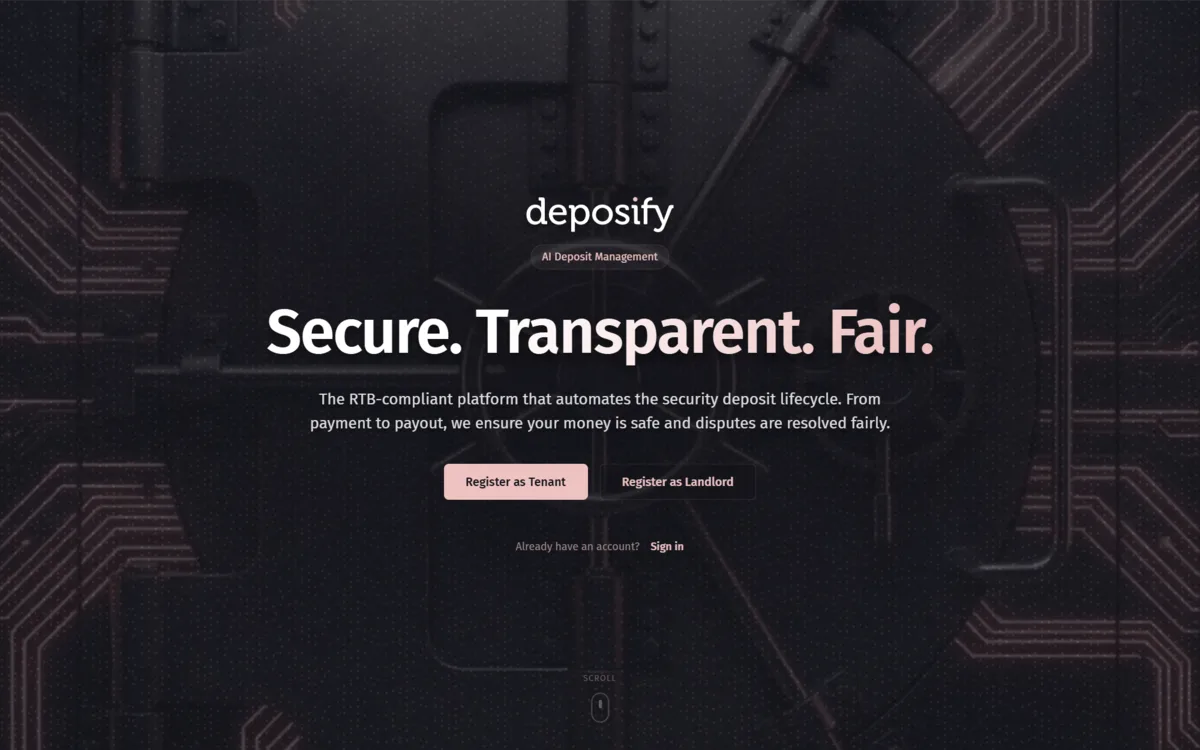
Ireland had no modern way to hold a deposit, and a 17‑week way to fight over one.
The Residential Tenancies Board dispute process takes 17+ weeks to resolve. And March 2026 regulations introducing 6-year minimum tenancies were about to change the market, creating both urgency and opportunity.
The brief: design and build a complete tenancy deposit platform that would
- create a distinctive, trust-building fintech aesthetic, not the default look of an AI-generated app
- handle two very different journeys, for tenants and for landlords
- integrate AI-assisted dispute resolution while keeping GDPR Article 22 compliance, so a human always accepts the recommendation
- meet RTB requirements for evidence handling and timelines
- scale from MVP to property managers and Approved Housing Bodies
The Hex Theme: a dark fintech system that makes money legible.
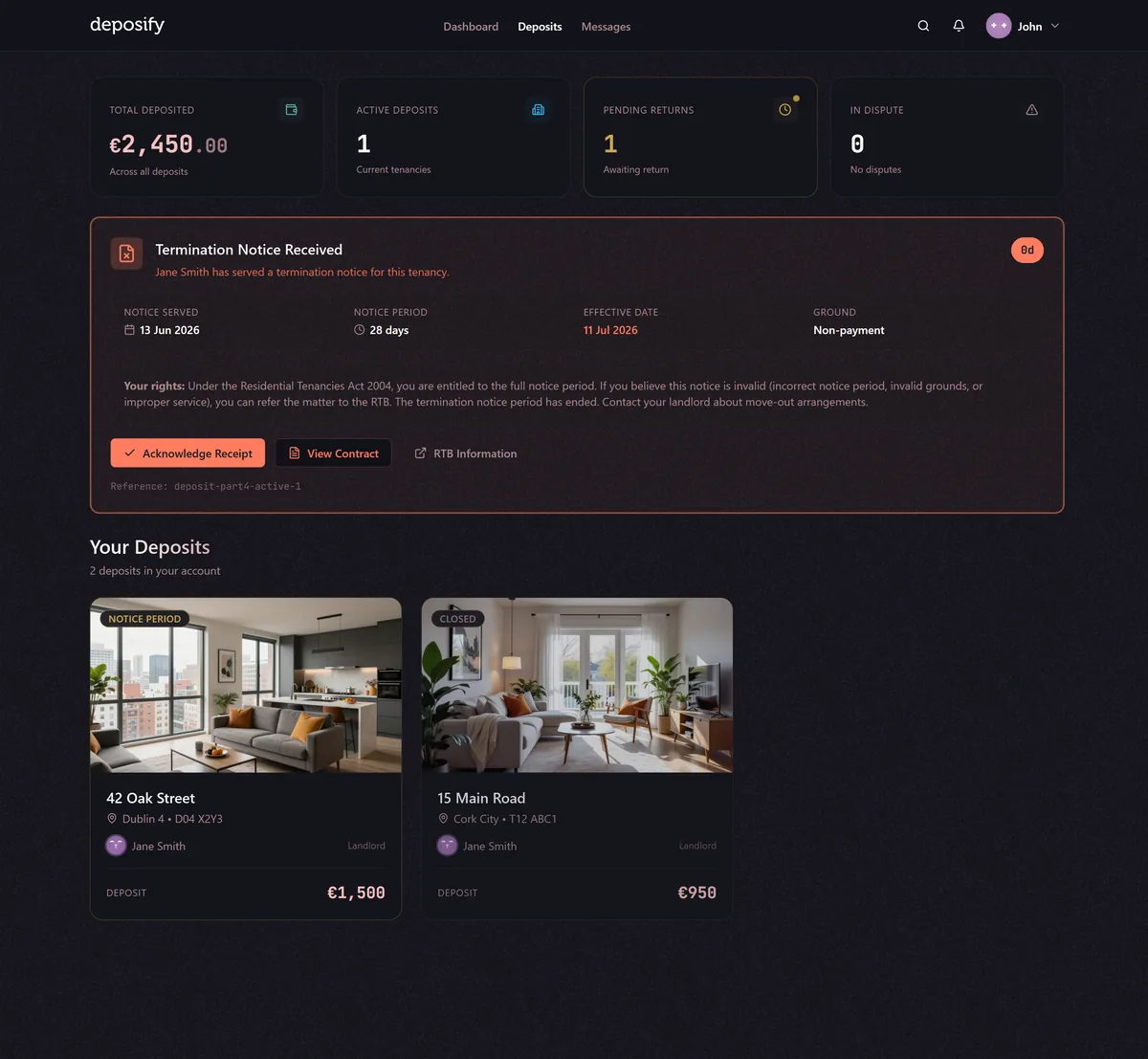
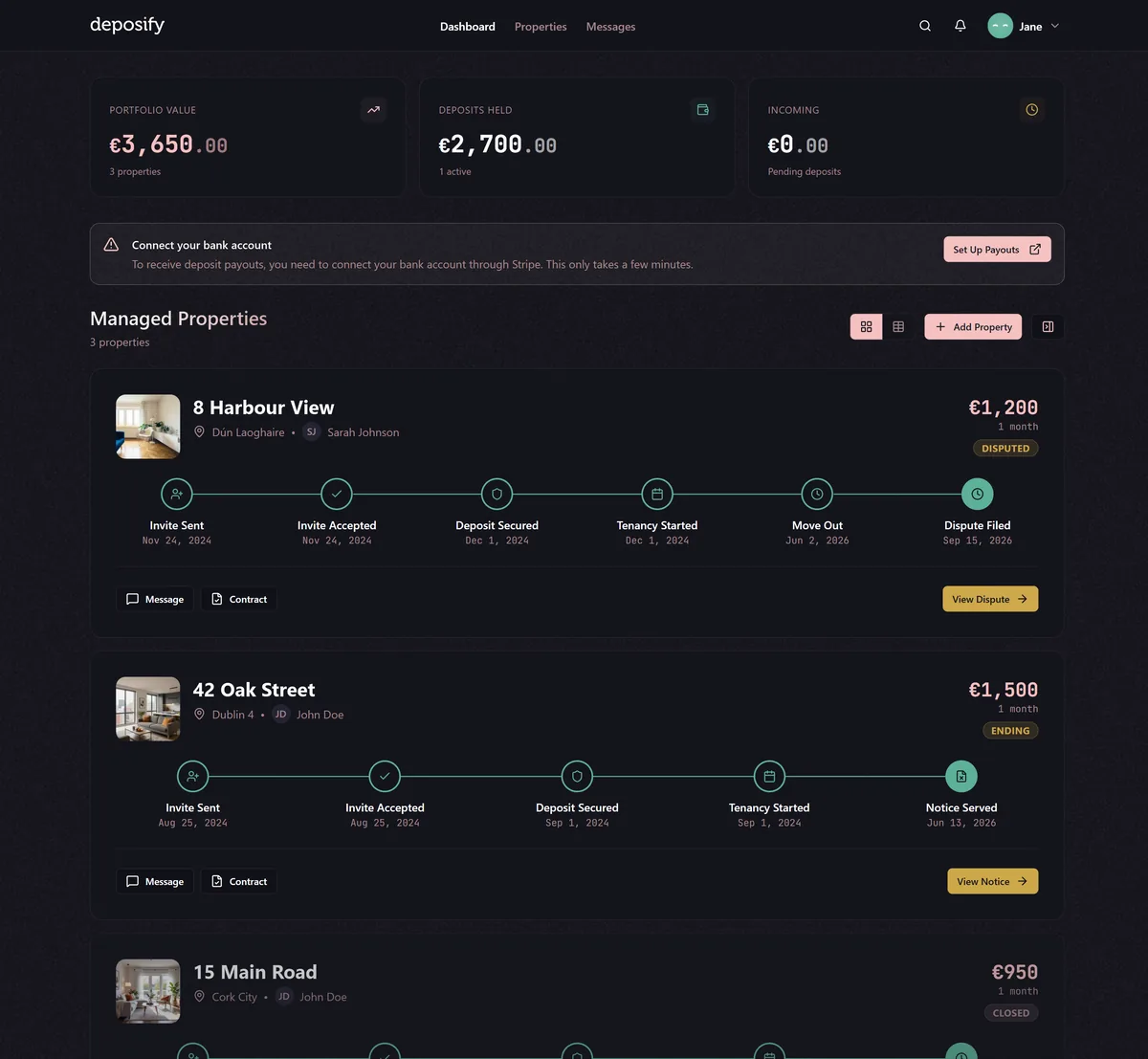
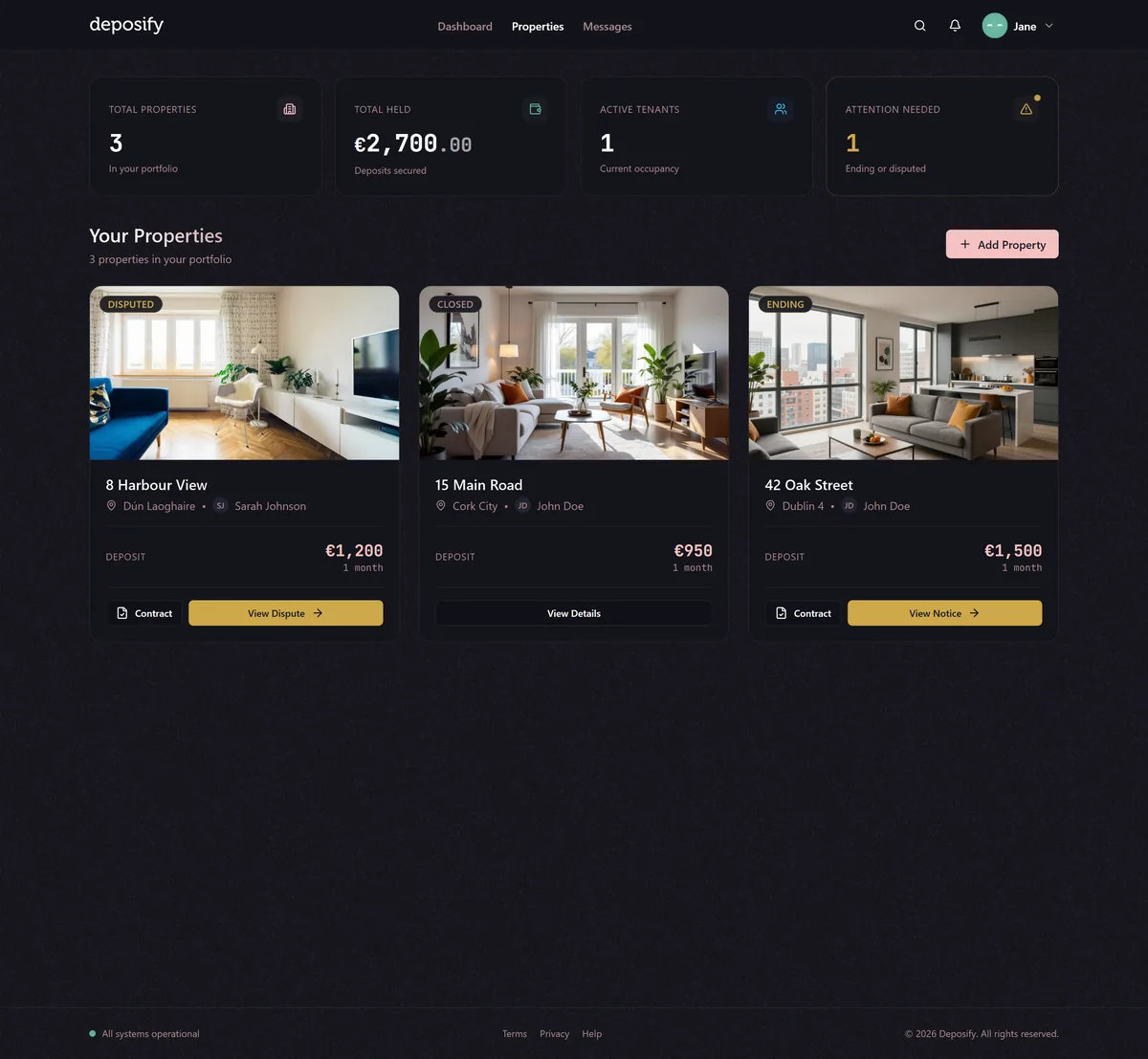
A dark-mode aesthetic with rose pink accents, built to feel like a financial instrument rather than a chatbot. JetBrains Mono carries every figure: deposits, IDs, timestamps. Semantic status colours do one job each: teal for success, gold for warning, coral for destructive. The whole thing is a documented component library built on CVA patterns, WCAG 2.1 AA throughout.
Four anchor points turn a deposit into a story you can follow.
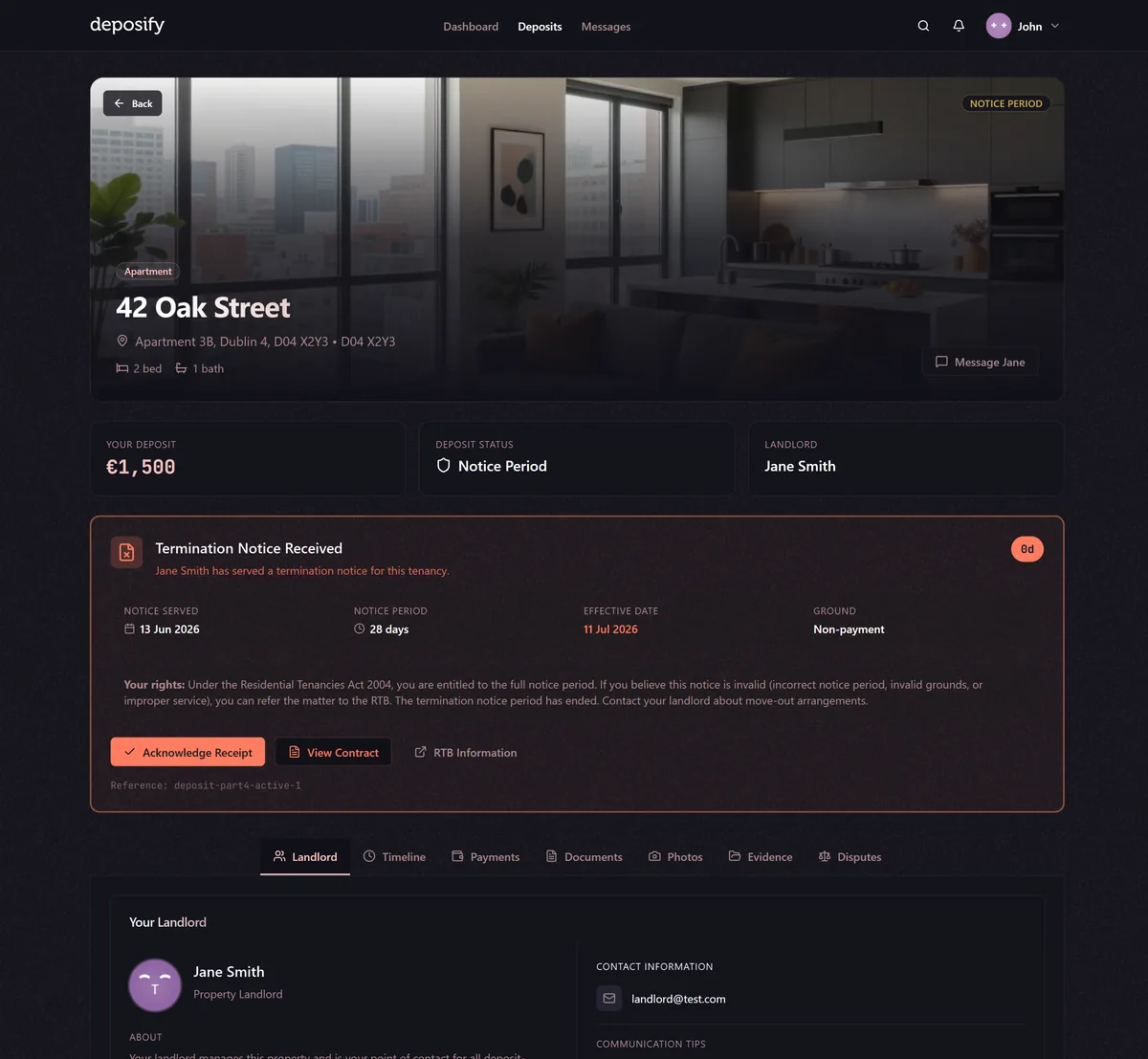
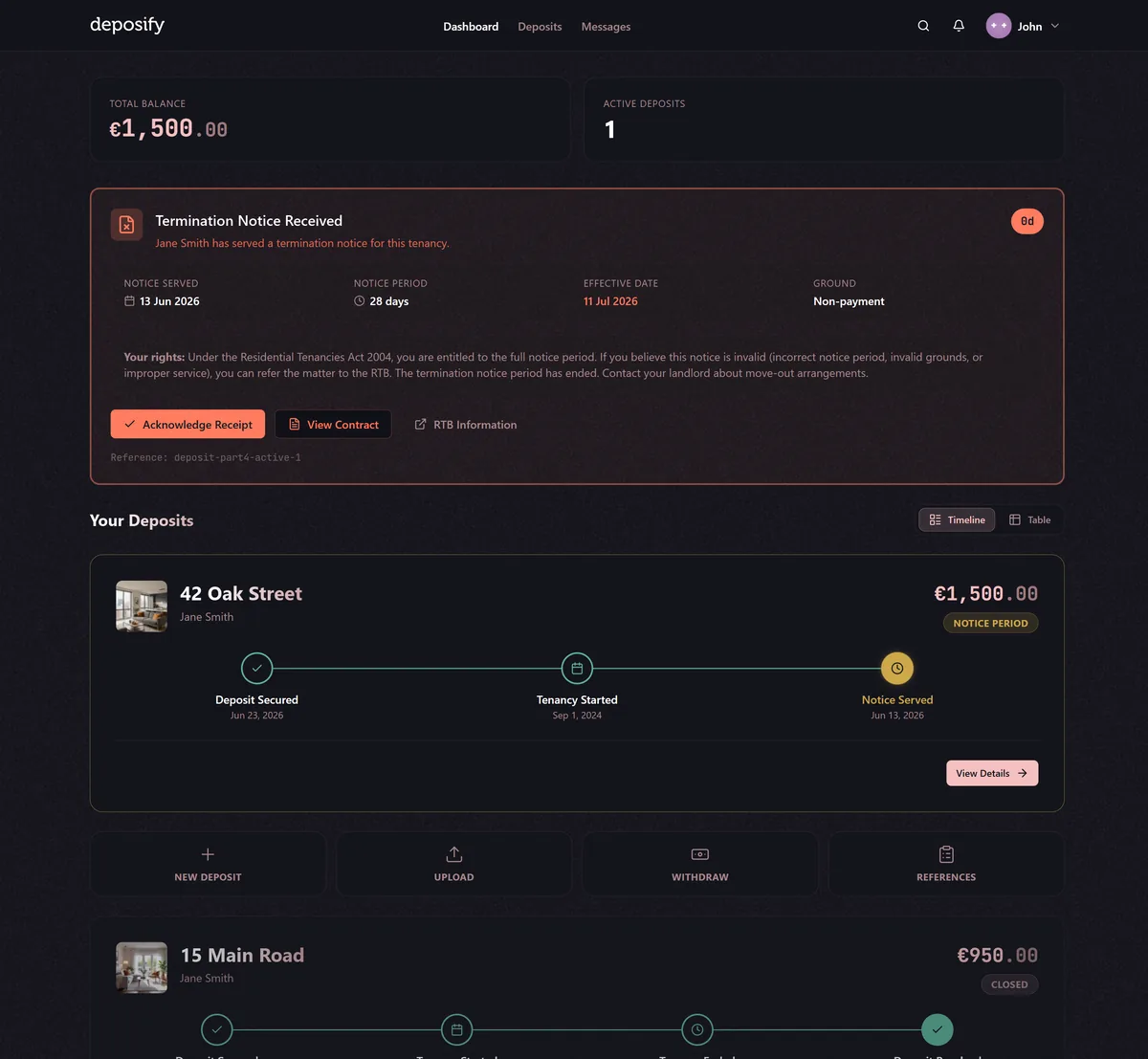
The 4-Point Anchor Framework: Deposit Secured, Tenancy Start, Tenancy End, Resolution Deadline. A planned mid-tenancy checkpoint answers the problem unique to the new 6-year tenancies, where evidence goes stale long before the deposit comes back. Horizontal timeline components show where every deposit is in its life.
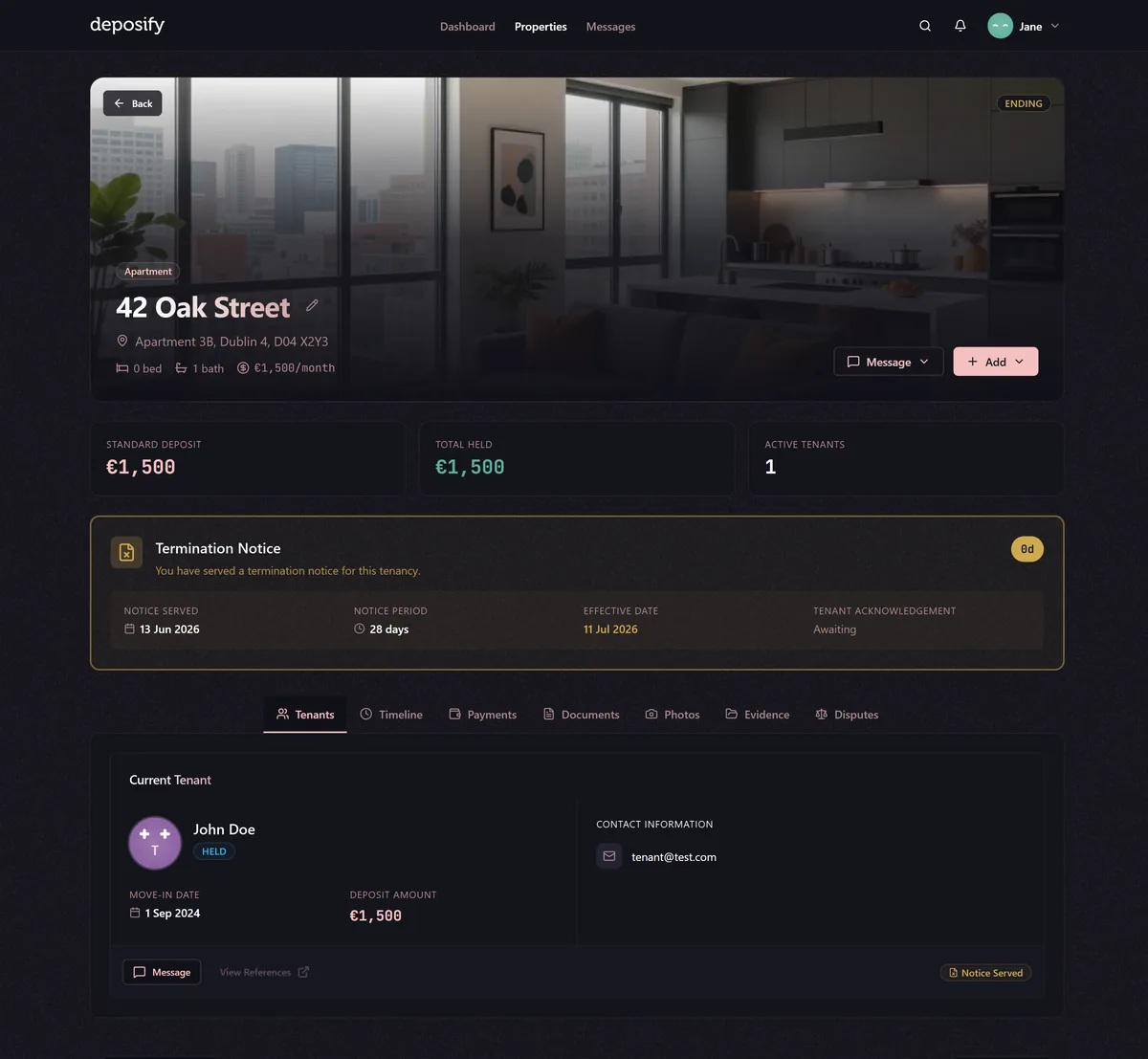
Tenants see four milestones. Landlords see six, because their side of a tenancy carries more moving parts. Same theme, different density.
AI‑assisted, never AI‑arbitrated. People make the final call.
Terminology matters in regulated spaces. “AI-assisted resolution”, not “AI arbitration”, keeps humans in the decision, which GDPR Article 22 requires. Both parties accept a recommendation before it stands, every recommendation shows its confidence and its reasoning, and disputed cases escalate to the RTB.
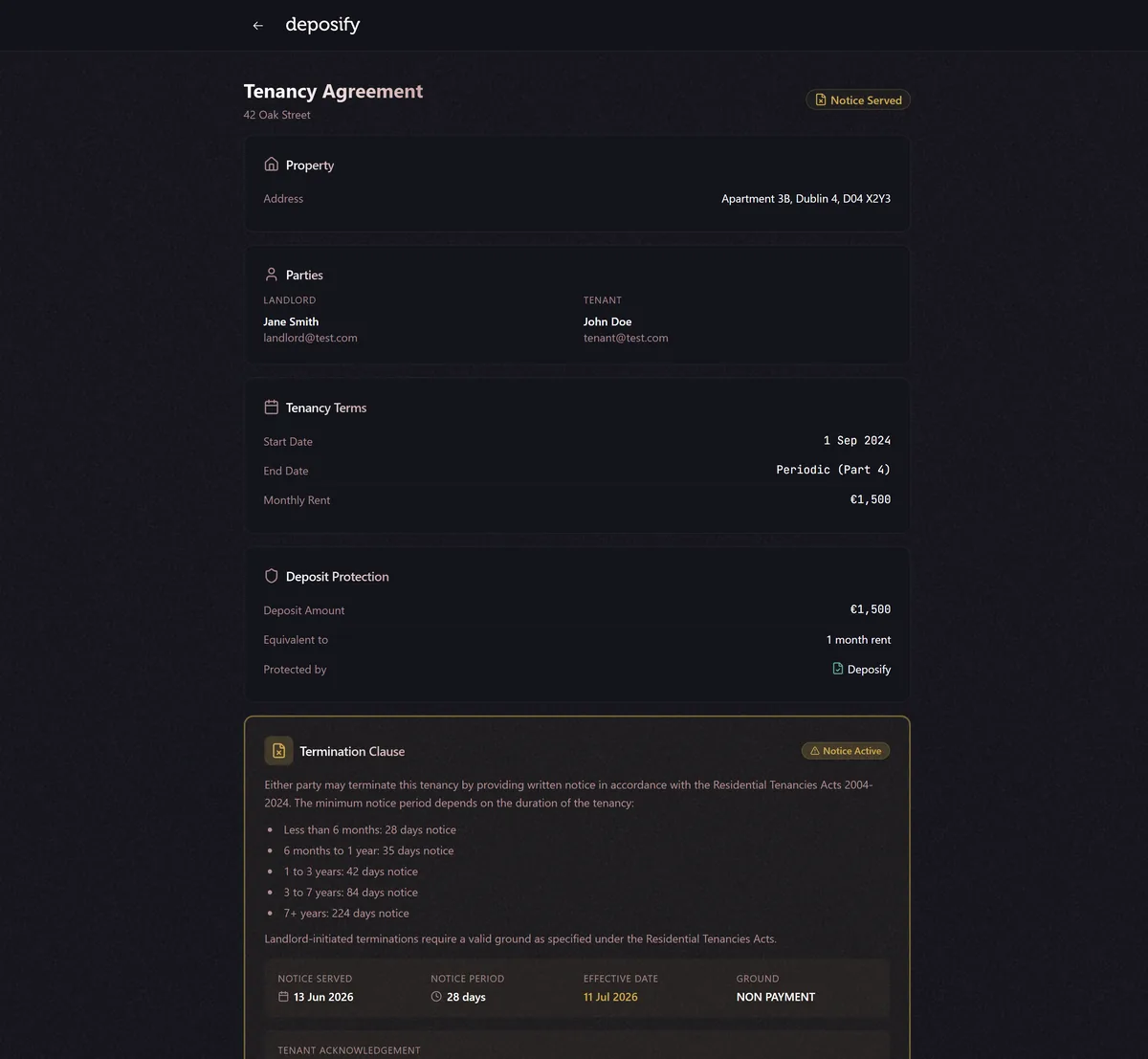
Evidence is validated on the way in: EXIF checks and SHA-256 hashing make every record tamper-proof and export-ready for the RTB.
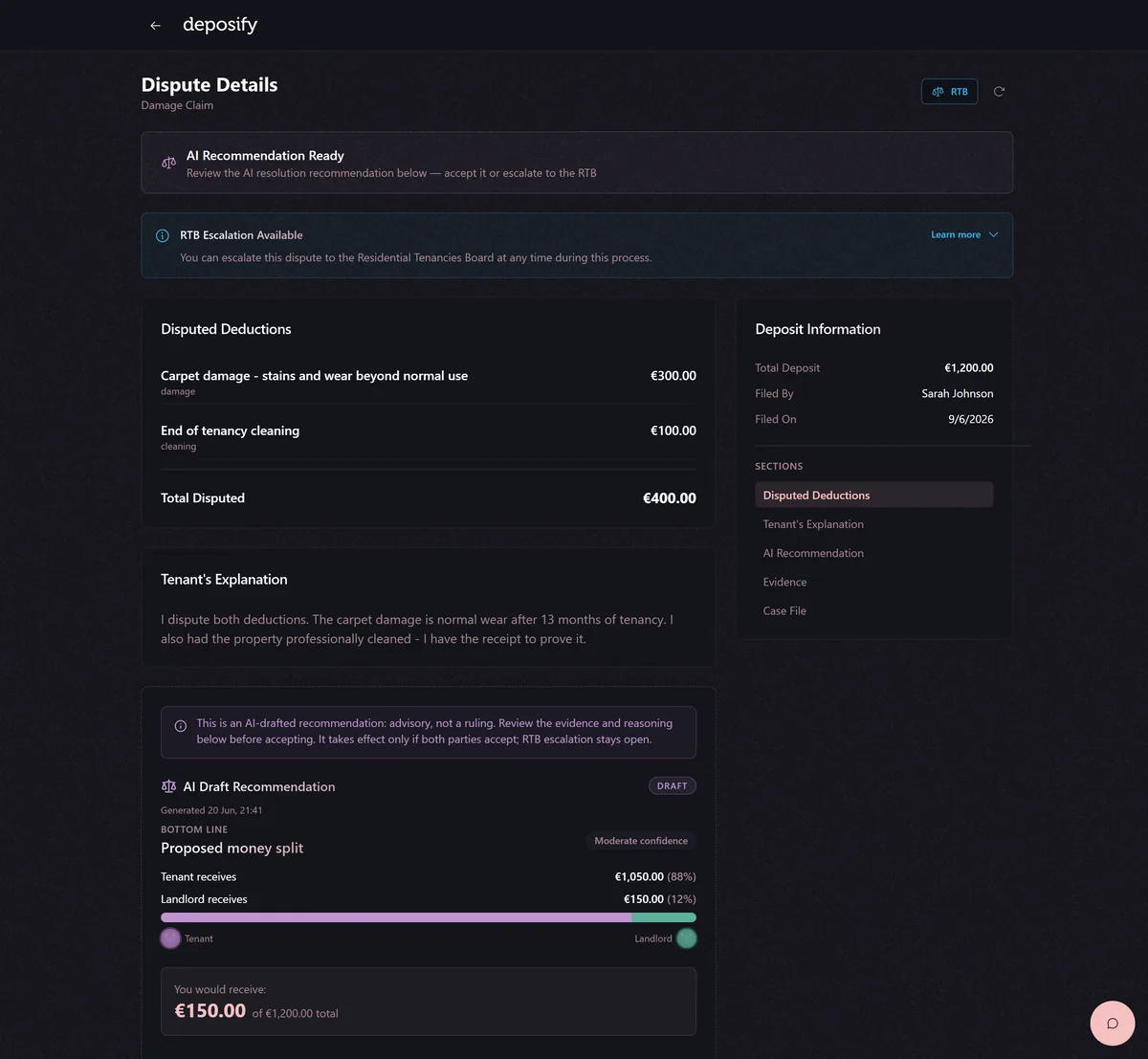
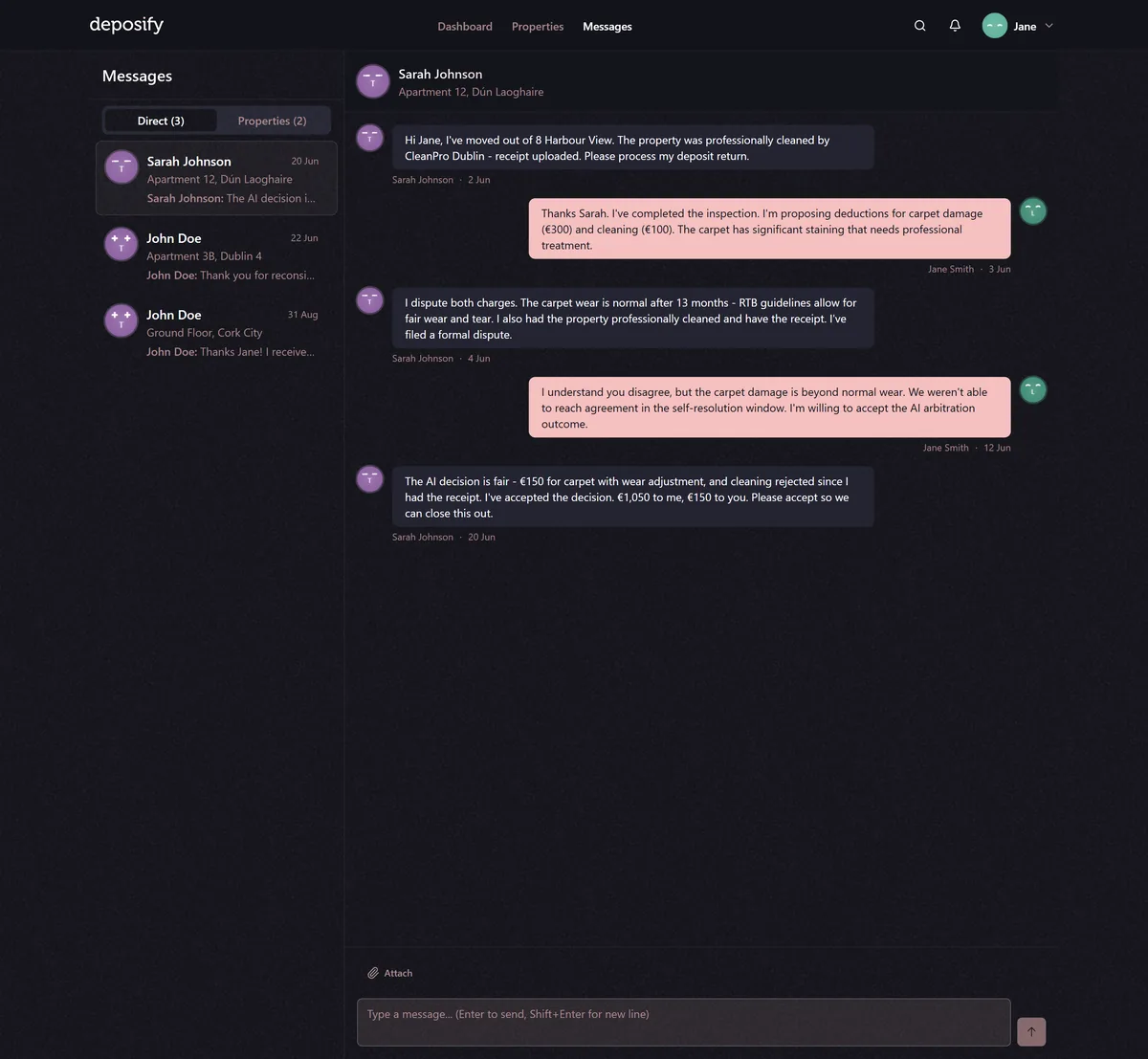
One system, two dashboards, and a dispute path designed to take days, not 17 weeks.
The screens above are the deliverable: tenant and landlord dashboards, timeline tracking for every deposit, and AI-assisted resolution that stays inside GDPR Article 22. The Properties page below is the pro view, for landlords with several properties and for agencies; a single-property landlord never sees it. Underneath them sit three things the screens cannot show:
- the complete Hex Theme design system, with documented tokens and patterns
- one set of patterns for 15 deposit states across database, UI and timeline
- RTB-ready evidence export packages
Where it stands, as of September 2026: I’m not aware of any AI-assisted deposit-dispute resolution service operating in the Republic of Ireland, and no UK or Irish government-approved deposit scheme uses AI in its adjudication decisions. Adjacent tools exist for inventory comparison and dispute letters. Self-resolution is designed to settle a dispute in days rather than the typical 17-week RTB process; that is the design target, not yet a measured result. The consent and explanation patterns draw on IF’s published catalogue of responsible-technology patterns.
Opens in a new tab. Test logins: landlord@test.com / landlord123 · tenant@test.com / tenant123
What the work taught: in a regulated product, terminology has legal weight, and a real design system is what keeps AI-generated screens on brand. Two-sided products need distinct but cohesive experiences, and AI-assisted development is only fast when it runs behind quality gates.